Countee Cullen
About Countee Cullen
Countee Cullen was a leading poet of the Harlem Renaissance who insisted on being judged as a poet first and a Black poet second, even as race remained central to his work. He wrote in traditional lyric forms with a Keatsian beauty that gave classical dignity to the African American experience. His debate about racial identity and artistic freedom remains relevant to every young writer today.
Literary Elements & Structure
Cullen was a devoted formalist, writing in sonnets, ballads, and lyric stanzas with careful attention to rhyme and meter. His language is elegant and literary, drawing on the Romantic tradition while addressing distinctly modern racial concerns. He used irony and restraint to convey pain, letting the tension between beautiful form and painful content do the emotional work.
Themes
- Racial Identity — He explored what it means to be Black in America with nuance, pride, and anguish.
- Art and Race — He grappled with whether a Black poet should be defined by race or transcend it.
- Faith and Doubt — He questioned a God who permitted racial injustice, especially in "Yet Do I Marvel."
- Beauty — He celebrated beauty as a value in itself, insisting on its availability to Black experience.
If You Match This Artist
You care about beauty and craft, and you want your identity to be part of your poetry without being the only thing people see. Your work probably has an elegance that carries deep feeling underneath. Keep insisting on being all of who you are on the page — a skilled artist and a whole person.
Literary Terms in Their Work
- Rhyme Scheme — His traditional rhyme schemes give his poems a lyric beauty rooted in the Romantic tradition.
- Allusion — He referenced Keats, the Bible, and Greek mythology to place Black experience in universal literary context.
- Meter — His iambic rhythms are smooth and musical, balancing elegance with emotional weight.
- Juxtaposition — He placed beauty against injustice, creating ironic tension that deepens both.
From the Power Poetry Archive
The original Countee Cullen profile from the classic Power Poetry site.
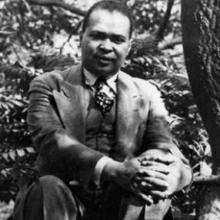
Countee Cullen was born Countee LeRoy Porter in Louisville, Kentucky on May 30, 1903. When he was 15 he was unofficially adopted by F. A. Cullen, the minister of a Methodist church in Harlem. Cullen atteded both high school and college in New York City. It was around this time his first poems were published in major publications like Harpar's and Poetry Magazine. He success continued when he was admitted to Harvard University to complete an MA in English. He published several more poetry collections in the years following his graduation. He taught in New York City public schools for 12 years beginning in 1934 until he died on January 9, 1946.
Movement:Harlem Renaissance
Prevalent Literary Themes:african american experience
Prevalent Literary Devices: allusion, imagery, allegory
When matched to Countee Cullen, it means that similarities have been found between your poetic style and the themes and literary techniques typically seen in works by this famous poet. For example, you might use allusions or imagery in the same way that Cullen does. Recognizing these similarities is important because it gives you information about the history of your poetic style, which poets might inspire you, and what writing techniques you should try next.
Which Writing Techniques Should You Try Next?
Try using vivid imagery and allegory more often. You might also like experimenting with writing in traditional formal structures, but not writing about traditional topics.
Make sure to check out poets.orgfor more information!
Poetic DNA
Countee Cullen writes like a storyteller who speaks in metaphor between shadow and light.
How we understand your poetry →
Explore Poems That Resonate with Countee Cullen
Poems tagged with “identity” — a theme central to Countee Cullen's work.